
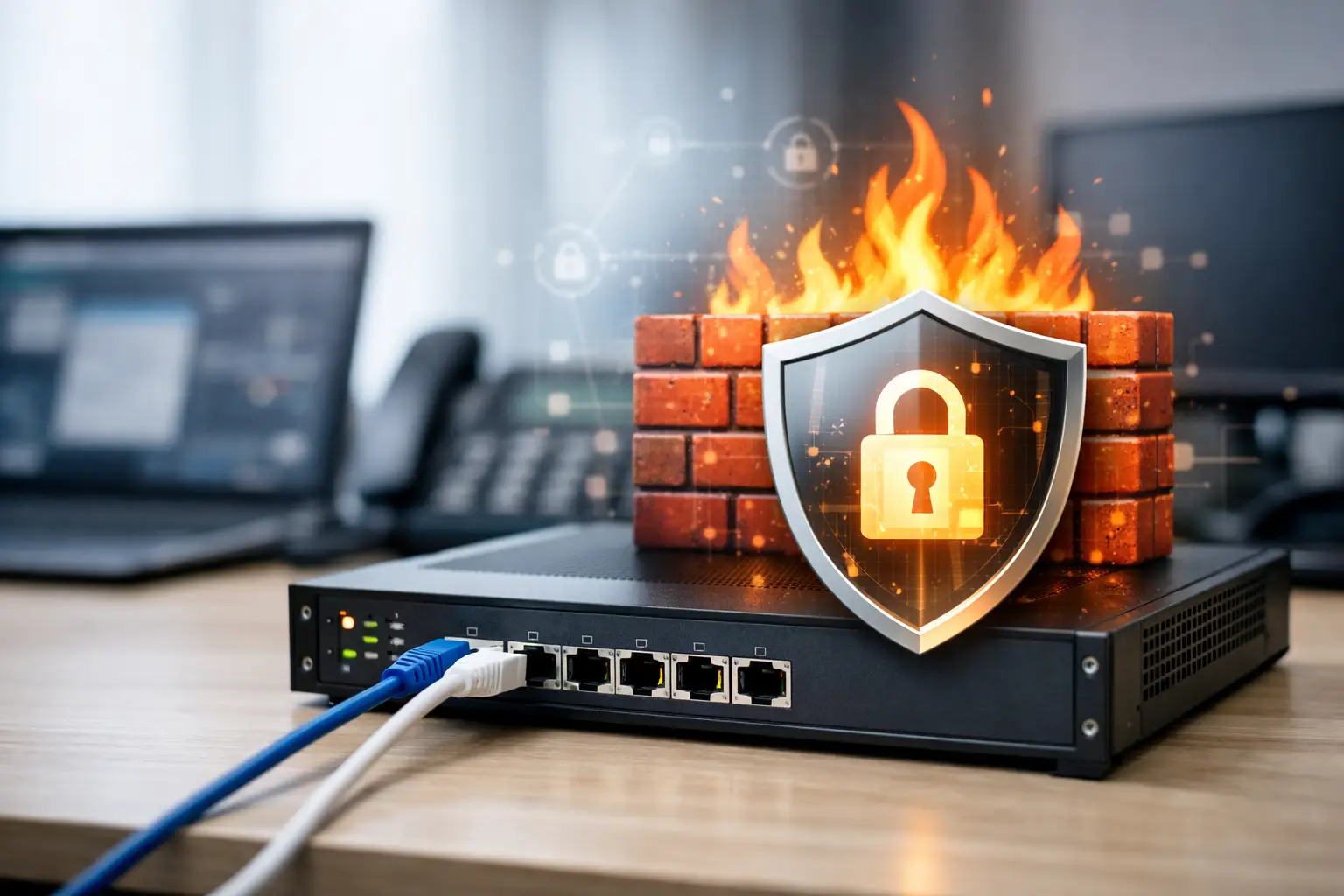
Best Small Business Firewall Solutions
A lot of small businesses find out their firewall is inadequate only after a ransomware scare, a failed audit, or a remote employee clicks the wrong link. By that point, the conversation gets expensive fast. The best small business firewall solutions help prevent that situation by giving you stronger control over internet traffic, better visibility into threats, and fewer security gaps between your office, cloud apps, and remote users.
For most small and midsize companies, the hard part is not realizing a firewall matters. It is figuring out which type actually fits the business. A five-person office with basic cloud apps does not need the same setup as a growing manufacturer, healthcare practice, or multi-location company with VoIP, file servers, VPN access, and compliance concerns. That is why the right answer is rarely the cheapest box on a shelf or the most advanced enterprise platform on paper. It is the option that matches your risk level, day-to-day operations, and support capacity.
What makes the best small business firewall solutions worth it
A business firewall does more than block bad traffic. It acts as a gatekeeper between your internal network and the outside world, but modern firewalls also inspect traffic, filter web activity, support secure remote access, segment devices, and detect suspicious behavior. If your business relies on cloud software, phones, printers, mobile devices, and staff working from different locations, that added visibility matters.
The real value is operational. A good firewall can reduce downtime, prevent avoidable security incidents, and give your team a more stable network. It can also make compliance conversations easier if you handle sensitive customer data, payment information, or regulated records. That said, features only help if they are configured correctly and monitored over time. Many security issues come from weak rules, outdated firmware, or a firewall that was installed once and then ignored.
Best small business firewall solutions by type
When business owners ask for the best option, they are usually asking two different questions at once. They want strong security, and they want something practical to buy, deploy, and maintain. The most common solutions fall into a few categories.
Next-generation firewalls
For many small businesses, a next-generation firewall is the right place to start. These devices go beyond basic port blocking and include intrusion prevention, app control, web filtering, malware inspection, VPN support, and traffic analysis. Brands in this category are often the strongest fit for companies that need layered protection without building an internal security team.
The trade-off is management. The feature set is better, but the configuration is also more involved. If nobody is watching alerts, reviewing logs, updating policies, and keeping firmware current, you can end up paying for protection you are not really using.
Unified threat management appliances
UTM firewalls package several security functions into one platform. For small businesses, that can be attractive because it simplifies purchasing and often lowers the total cost of ownership. Instead of adding separate tools for filtering, antivirus, VPN, and intrusion prevention, you get one system handling several jobs.
This approach works well for organizations that want straightforward security with one dashboard and one support path. The downside is performance. If every feature is turned on, lower-end models can slow down under heavier traffic loads. That is why sizing matters as much as brand selection.
Cloud-managed firewalls
Cloud-managed firewall solutions appeal to companies with limited in-house IT resources or multiple sites. The hardware sits in your office, but management, reporting, and policy updates are handled through a cloud portal. This can make administration easier and more consistent, especially if you have a main office, satellite locations, and hybrid staff.
These solutions are often easier to scale, but they also tie you more closely to the vendor ecosystem. That is not always a problem. In fact, it can be a benefit if you value simplicity and centralized control. Still, it is worth understanding licensing costs and what happens if you want to switch platforms later.
Managed firewall services
For many busy companies, the most practical answer is not just buying hardware. It is using a managed firewall service. In that model, the firewall is selected, configured, monitored, updated, and supported by an IT provider. You still get the protection, but your team does not have to become firewall specialists.
This is often the best fit for organizations that care about uptime and security but do not want the burden of day-to-day management. The cost is higher than a do-it-yourself setup, but it often saves money over time by reducing misconfiguration, shortening incident response, and giving you access to experienced support when something changes.
How to choose the right firewall for your business
The best small business firewall solutions are usually the ones that align with your operations, not the ones with the longest feature list. A few practical questions can narrow the field quickly.
Start with your size and traffic patterns. How many users do you have today, and how many do you expect in the next two to three years? How much of your work happens in the office versus remotely? If your internet connection, voice systems, file access, and cloud software all run through the same environment, you need a firewall that can handle real-world demand without becoming a bottleneck.
Next, look at your risk profile. A law office, medical practice, financial service firm, or manufacturer handling sensitive data should not choose the same security posture as a very small office with minimal customer information. If cyber insurance, compliance requirements, or client contracts are part of the picture, your firewall needs to support logging, policy control, and stronger threat prevention.
Then consider support. This is where many purchasing decisions go sideways. A good firewall in the wrong hands can still leave you exposed. If you do not have internal IT staff who can manage firmware, rules, VPNs, reports, and troubleshooting, a managed approach is often the safer choice. That is especially true if your business cannot afford long outages or security guesswork.
Features that matter most
Not every feature deserves equal attention. For small businesses, the most useful firewall capabilities are usually intrusion prevention, secure VPN access, web content filtering, malware and threat detection, network segmentation, and clear reporting. If you support remote workers, VPN reliability and user management become especially important. If you run phones, cameras, or specialized devices, traffic control and network segmentation matter more.
Reporting is often overlooked, but it should not be. If your firewall cannot show what is happening on the network in plain terms, it becomes harder to spot issues early. Good visibility helps with troubleshooting, planning, and proving that your security controls are active.
Cost, licensing, and the hidden parts of the decision
Firewall pricing is rarely just the hardware cost. There is the appliance itself, plus subscriptions for security services, support contracts, setup time, and ongoing management. Some products look affordable up front but become expensive once annual licenses are added. Others cost more initially but include stronger support and fewer add-ons.
There is also the cost of underbuying. If your firewall is too small for your traffic, users notice it in dropped calls, slow applications, unstable VPN sessions, and support headaches. Replacing an undersized unit a year later is usually more expensive than sizing it properly from the beginning.
This is where a consultative approach helps. Providers like Schneiders MSP typically start by looking at the business as a whole – internet use, remote access, compliance, backup strategy, cybersecurity needs, and growth plans – rather than dropping in a generic device and calling it done.
Common mistakes to avoid
One common mistake is treating the firewall as a one-time purchase. Security changes constantly, and so does your business. New devices, staff changes, software rollouts, and office expansions all affect what the firewall should be doing.
Another mistake is assuming a router from your internet provider is enough. For a home office, maybe. For a business handling customer data, shared files, remote access, and cloud systems, that level of protection is usually too limited.
The last big mistake is choosing based on brand reputation alone. Good brands matter, but the right fit depends on deployment, management, and support. Even a well-known firewall can become a weak point if it is misconfigured or poorly maintained.
A firewall should make your business easier to protect, not harder to manage. If you are evaluating options, the smartest move is to choose a solution that fits your environment today, leaves room for growth, and comes with support you can actually rely on when things get busy. That is usually where the best decision starts.